Official Guidance from the NCA and IWF
Artificial Intelligence (AI) is becoming a part of everyday life. Whilst it has many benefits, it can also be misused – including by those who use it to make, manipulate and share nude, semi-nude or sexual images and videos of children. This is child sexual abuse material (or 'CSAM') and, under UK law, is illegal.
Hearing about this as a parent or carer can feel alarming, but you are not alone. It’s important to know that there are steps you can take, many of which you may already be doing, to help better protect your child.
This guide from the Internet Watch Foundation (IWF) and the National Crime Agency (NCA) is here to support you. It will help you to understand more about how AI can be misused, why it matters and what steps you can take to feel confident and help keep your child safer online.

One of the most important protective factors in a child’s life is an informed parent, carer or trusted adult who knows how to respond calmly, appropriately and confidently when something goes wrong.
 |
Are you a teacher or do you work in a professional setting with children or young people? Take a look at our professionals' guide. |

What is Artificial Intelligence (AI)?
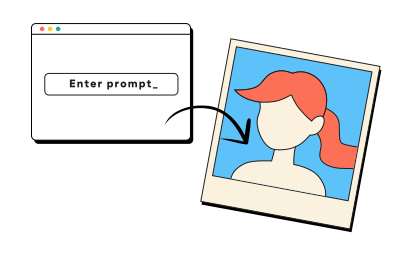
Artificial Intelligence (AI) describes technology that can act in ways that would normally need human thinking or creativity. AI technology can hold conversations, answer questions and even create realistic images and videos.
AI is already embedded in many tools and services we use daily, such as film streaming platforms, social media and navigation apps.
What are child sexual abuse images or videos generated using AI?
Images or videos don’t need to show sexual acts to be considered child sexual abuse material. This can also include nude or semi-nude images of someone under 18 years old.
Child sexual abuse images or videos created or altered using AI may include:
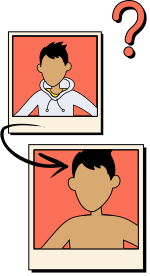
- Everyday images of a child or young person that are manipulated into child sexual abuse imagery, including images taken from social media, websites or messaging apps, that are manipulated into sexualised or abusive imagery. These are sometimes known as ‘deepfakes’.
- Images or videos that look like a real child but are completely artificial.
- AI technology that digitally removes clothing from existing images to create nude or semi-nude images, sometimes known as ‘nudifying’.
Even when a child sexual abuse image has been created or altered using AI, including images that do not look realistic, such as cartoons or animations, they are illegal and can cause harm.
Conversation starters: Exploring AI and image consent with your child
You don’t have to know everything about AI to talk to your child about it. What matters most is including it in the regular, open conversations you’re already having and letting them know that they can come to you if something online worries them.
Being curious, listening to them and learning together can help to build trust and will let your child know that you’ll support and not judge them if they come to you for help.
The questions and talk prompts below will help you to talk about AI misuse and image consent without sounding too scary or serious.
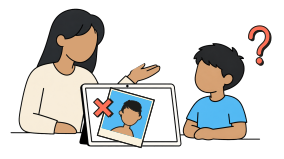
Talking to your child about
AI, nudes and deepfakes
“Have you used AI at school or at home? What did you use it for? Did you find it helpful?”
Start the discussion and find out what they already know about AI.
“Some AI apps can make or edit images or videos. Sometimes people do this to make fake or inappropriate content. What would you do if something online didn’t feel right?”
Open the door to the misuse of AI and keep the focus on their safety.
“Have you heard of ‘deepfakes’?”
Remind them that just because something looks real online, it doesn’t mean it is.
“Images or videos made or changed using AI can be harmful or even illegal. Why do you think this might be?”
Help them to consider the impact and potential consequences of misusing AI.
“If this were to happen to you or someone you know, you can…”
Reassure them that they can speak to you if they are worried. Talk through the steps they can take if someone has created AI imagery of them.
Image consent
“How do you decide when a picture is ok to share?”
Discuss privacy boundaries – for themselves and others.
“If someone took a picture of you and shared it without asking for permission, how would you feel?”
Build on their understanding of consent, explaining that it is ok to say no to pictures being posted or asking for them to be taken down.
“What advice would you give to a friend who had an image shared of them without their consent?”
Focusing the question on someone else might make it easier for your child to explore feelings and responsibility without pressure.
“If someone asked you to send or post a picture that you didn’t feel comfortable with, what could you say?”
Talk through strategies for withdrawing from online conversations that make them feel uncomfortable, including:
- Changing the topic
- Using humour to deflect
- Explaining how they feel
- Stepping away from their device for a moment
“Someone might say that sharing altered pictures of others is ‘just a joke’ or ‘banter’. What do you think about that?”
Help your child to think about whether intent matters and recognise the difference between humour and harm. You could even ask them what advice they would give a friend who had these views, allowing them to think about consent without relating it to themselves.
“Did you know that nude or semi-nude images of under 18s can be reported and removed online, including those created or altered using AI?”
Let them know that services, including Report Remove, can help to remove nude or semi-nude images of under-18s that have been shared, or might be shared online.
What to do next
-
Reassure them that they have done the right thing by telling you what has happened, you will help them, and they are not to blame.
-
If your child is being blackmailed or threatened with sexual abuse imagery of themselves, they should stop contact and block the account. If blackmail is for a financial demand (such as transferring money or purchasing gift cards), do not pay. If they have paid, stay calm but don’t pay anything more.
-
Don’t ask them to show you the image.
-
Avoid deleting anything that could be used as evidence, such as messages, images, videos or profile details.
-
Report it to the police. Call 101 or 999 of there is an immediate risk of harm to your child. Under 18s can also report online sexual abuse or exploitation directly to the NCA's CEOP Safety Centre.
-
Report it to the platform, website or app on which the incident has occurred. For advice on how to report to major social media platforms, visit Internet Matters.
-
Report the image to Report Remove, a service run by the NSPCC’s Childline and IWF. They can seek the removal of nude images and videos that may appear online and offer mental health support for young people.
-
Access emotional and wellbeing support for you and your child. Experiences involving sexual images, including those generated using AI, can be stressful and cause worry, shame or even fear. You can find advice on looking after your child’s mental health from the NHS or contact Childline. The Marie Collins Foundation also supports victims and survivors of technology-assisted child sexual abuse.
Adult Victims
The Revenge Porn Helpline can support all adults in the UK who have had intimate images shared online without consent and can help report intimate images for removal.
StopNCII.org, a global tool from SWGfL, can protect intimate images from being shared on participating platforms.

If you’re worried your child has created or shared a sexual image or video of another child, visit stopitnow.org.uk
Other helpful organisations & resources
- Marie Collins Foundation - Supports children, young people and families affected by technology-assisted child sexual abuse and provides advice, guidance and recovery support
- TALK - A practical guide from the Internet Watch Foundation to help parents and carers understand online sexual abuse risks and support children to stay safe online.
- YoungMinds - Mental health advice and emotional support resources for young people and parents.
- Parent Zone - Support and information to help parents navigate children’s digital lives and emerging technologies with specific guidance on AI.
- NSPCC - Practical advice for parents and carers on keeping children safe online, talking about difficult topics, and getting support.
- Are you a teacher or do you work in a professional setting with children or young people? Take a look at our professional's guide.
- The CEOP Education programme offers a range of free resources for professionals, parents/carers and under-18-year-olds on the threat of online child sexual abuse. Visit ceopeducation.co.uk to find out more.
This guide is supported by


Help us improve this guide
We'd value your thoughts - take our short survey to help us make this guide even more useful for parents and carers.
